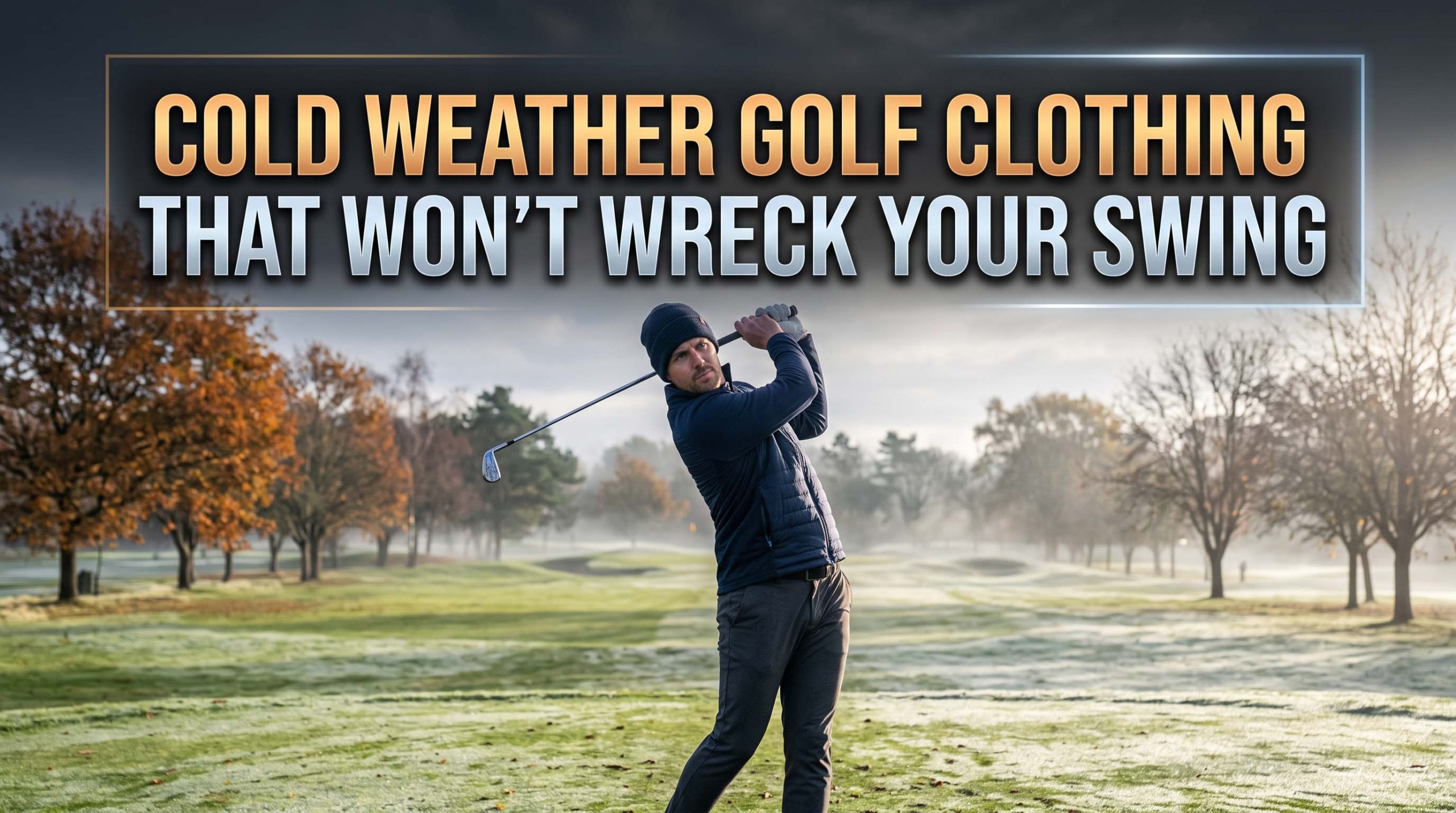
The short answer on cold weather golf clothing is this: three thin layers beat one thick one, every time. A moisture-wicking base, a light insulating mid-layer, and a windproof shell give you the same warmth as a heavy coat without the bulk that fights your shoulder turn. Add real gloves and a hat that doesn't shift, and the temperature stops being the thing that ruins your round.
That sounds obvious once you say it. It is also not what most golf clothing racks are set up to sell you, because one puffy jacket is one item, one price tag, one easy upsell. A system of thinner pieces is a better answer and a worse sale, so nobody at the pro shop counter is going to walk you through it.
Why One Heavy Coat Is the Wrong Move
Cold air is a poor conductor, which is the whole trick behind layering: a jacket does not generate heat, it traps the layer of warm air your body is already making. Several thin layers trap more of that air, in more separate pockets, than one thick layer of the same total warmth. That is why a base, a mid, and a shell outperform a single insulated coat at the same bulk, and it is also why you can shed one piece on the back nine when the sun comes up instead of sweating through the whole round in something you can't take off on the course without stripping down.
The other reason to avoid the single heavy coat is specific to golf and not to skiing or hiking: your swing needs your shoulders, hips, and arms to rotate through a full range with nothing binding. A stiff, insulated jacket adds resistance exactly at the top of the backswing and through impact, the two moments where an inch of extra fabric under the arm costs you the most. Thin layers that each move independently don't do that.
The Three-Layer System for Cold Weather Golf Clothing
Base layer. A snug, moisture-wicking long-sleeve top, worn against the skin. Skip cotton entirely here: it holds sweat instead of moving it away, and wet fabric against skin is what actually makes you cold, not the air temperature by itself. Merino wool or a synthetic wicking fabric both do the job; the merino option also resists odor better across a long day.
Mid layer. A thin fleece, a light down or synthetic-insulated pullover, or a golf-specific quarter-zip. This is the piece doing most of the warmth work, and it should still let your arms swing freely when you take a practice pass. If it doesn't, it's the wrong mid layer regardless of how warm it feels standing still in the pro shop.
Shell. A windproof, water-resistant outer layer, ideally a vest or a soft-shell rather than a rigid rain jacket unless rain is actually forecast. Wind is the layer most golfers skip and the one that costs the most: even a moderate gust cuts through a bare mid-layer fast, and a thin wind shell stops most of that for very little added bulk. Sleeveless vests are worth calling out specifically here, because they solve the shoulder-restriction problem completely while still cutting wind off your torso.
The Parts Everyone Underdresses
Hands, head, and feet lose heat faster than the torso does, and most golfers spend all their layering budget on a jacket and then play in a thin cotton beanie and whatever gloves were in the bag from August.
A dedicated cold-weather glove is not the same product as a summer grip glove with a warmer lining bolted on. FootJoy's product page for its WinterSof glove (read 2026-09-18) describes a knit palm designed for grip in cool, damp conditions paired with a fleece-backed, wind-resistant shell and an extended cuff that overlaps the wrist rather than stopping at it, which is the detail that actually keeps cold air from working up your sleeve. That construction, not the brand name on it, is what separates a real winter golf glove from a warm-looking glove: a wind-resistant back, a grip surface that still works when your hands are cool, and a cuff long enough to seal against your jacket sleeve. Cart mitts, which slide over your existing glove and grip between shots and come off only to swing, are the cheapest single upgrade for anyone who plays into genuinely cold mornings, because they let you keep a full glove on the club and a mitt everywhere else.
A close-fitting beanie beats a loose one you keep adjusting mid-swing over the course of a full round, and thin merino socks under your golf shoes matter more than people expect, since cold feet are the fastest way a round stops being fun regardless of what's on your torso.
What Bulk Actually Costs You at Address
Set up in your full winter kit before you leave the house, not on the first tee. Take a few practice swings in it. If a jacket restricts your shoulder turn, you will shorten your backswing to compensate without noticing you're doing it, and a shortened backswing shows up as lost distance and a steeper angle into the ball, not as an obvious "I can't move" sensation. That's the trap with spec-sheet marketing copy that promises "unrestricted movement": stretch panels help, but the only real test is your own practice swing in the actual layers you're about to play in, not a model doing a half-swing in a product photo.
Pants deserve the same scrutiny. A pair with some stretch or a fleece lining, sized to allow a base layer underneath without binding at the knee through your follow-through, beats anything marketed mainly on warmth. If you have to choose between a warmer pair that fights your lower body and a slightly cooler pair that doesn't, take the one that doesn't fight you.
Building the Kit Without Overspending
You don't need every piece on a cold-weather gear list any more than you need every club a manufacturer wants to sell you, a point we go into more directly in which clubs a casual golfer can genuinely skip. Start with what actually solves a problem you have: a real base layer and a windproof vest fix most of the discomfort most players report, and a proper pair of winter gloves fixes most of the rest. A heated jacket, an electric hand-warmer system, or a full head-to-toe branded cold-weather set can wait, because they solve problems most weekend golfers don't actually have often enough to justify the price. The same logic we use for clubs applies here: buy the piece that removes a specific complaint, not the piece with the best marketing photo, a distinction we cover in more detail in how to buy golf clubs without overspending.
Protecting the Gear While You're Bundled Up
Cold-weather rounds put your equipment through more than you'd think, and it's worth remembering the clubs need attention too once the round or the season ends. A club left wet and dirty in a bag that then sits in an unheated space is a bigger risk than the cold itself, a distinction we cover in full in our look at whether a cold garage actually harms golf clubs. If you're closing out the season rather than pushing through it in full winter kit, the prep is different again, and our guide to putting golf away for winter covers what genuinely needs doing before the clubs go into storage.
One More Thing: Course Conditions Aren't Just About You
Dressing for the cold solves half the problem; the course itself plays differently once temperatures drop, and that's not just a clothing issue. The USGA's own explainer on "winter rules" (read 2026-09-18) points out that what golfers call winter rules isn't a Rule of Golf at all, it's an optional Model Local Rule for Preferred Lies that a committee can adopt locally, letting players lift, clean, and place their ball within a defined area of the fairway when course conditions are rough. It exists precisely because cold-season turf and lies are unpredictable, the same unpredictability that makes a windproof shell and a pair of real winter gloves worth the modest cost: you're already managing conditions the course committee felt the need to write a rule around.
FAQ
What's the best base layer fabric for cold weather golf?
Merino wool or a synthetic moisture-wicking fabric, worn snug against the skin. Avoid cotton: it holds sweat rather than moving it away, and damp fabric against skin is what actually makes you feel cold on the course.
Do heavy winter coats really hurt your golf swing?
Yes, in a specific way. A stiff, heavily insulated jacket restricts shoulder rotation right at the top of the backswing and through impact, which tends to shorten your backswing without you noticing, costing distance and steepening your angle into the ball.
Are winter golf gloves and cart mitts legal under the Rules of Golf?
A plain glove used to grip the club is allowed under the Rules of Equipment, and cart mitts are simply accessories you wear between shots and remove to swing, so neither raises a legality question the way an aid built into the glove's gripping surface would.
How many layers do I actually need to buy?
Fewer than most gear lists suggest. A wicking base layer, one insulating mid-layer, and a windproof vest or shell solve most of the discomfort most golfers report. Add real winter gloves before you add anything else, and treat extras like heated jackets as optional rather than essential.
Does cold weather affect how far the ball flies?
Colder air is denser, and golfers commonly notice shots feeling like they carry a little less in cold conditions, though the exact distance lost varies by ball, swing speed, and altitude and isn't something to pin to a single number without testing your own equipment.