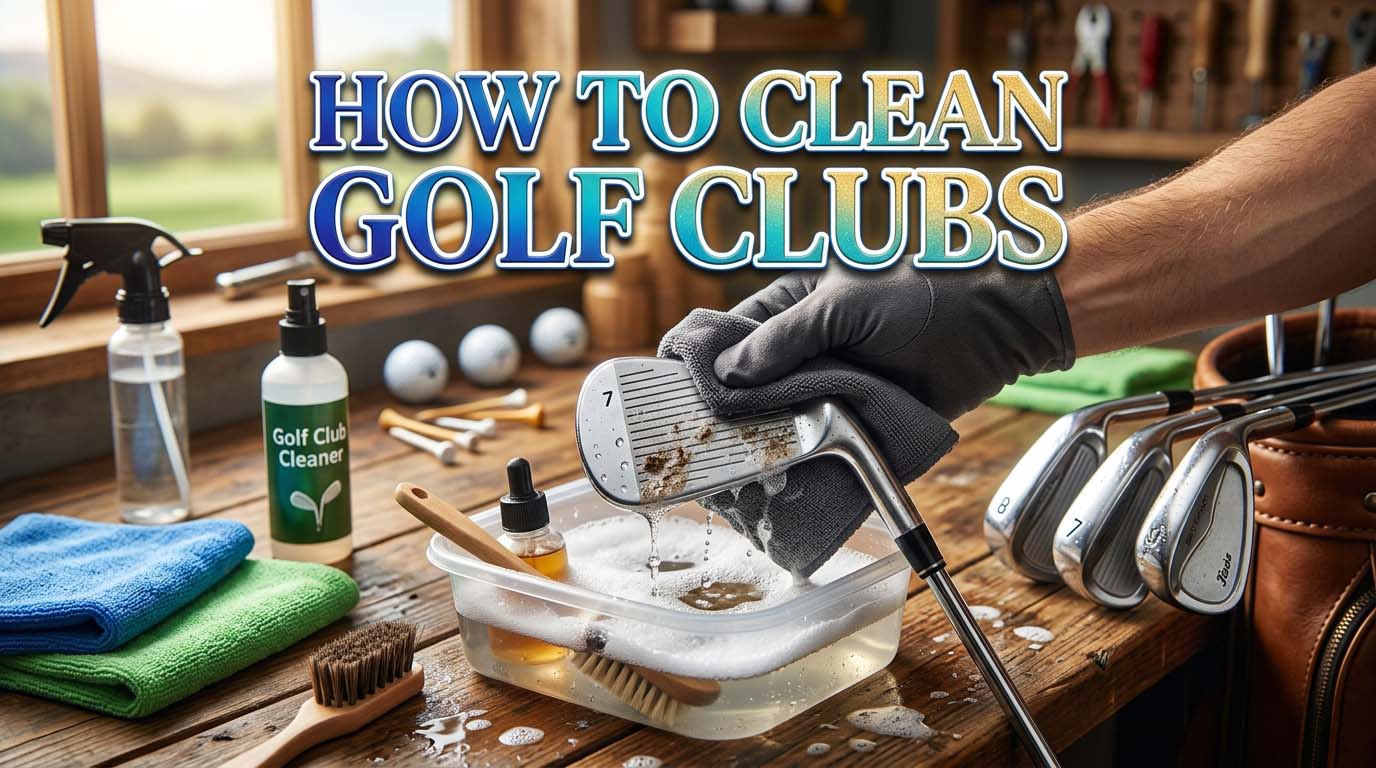
Here is how to clean golf clubs properly: soak the heads in warm, soapy water for five to ten minutes, scrub the grooves with a soft brush instead of anything metal, rinse them off, and dry everything completely before it goes back in the bag. The whole job takes about fifteen minutes and needs nothing you do not already own. Skip it for a season and compacted dirt sits in the grooves, and that quietly costs you the spin those grooves exist to create.
The rest of this covers the parts people get wrong: why the grooves matter more than the shine, why a wire brush is a bad idea for reasons beyond scratching, how wedges and grips need slightly different treatment, and when a cleaning session is the moment to notice something about a club you did not know.
What You Actually Need (Nothing From a Golf Cleaning Kit)
A bucket, warm water, a few drops of dish soap, a soft-bristle brush or an old toothbrush, and a towel. That is the entire list. Golf-branded cleaning kits and grooved cleaning tools exist and some are fine, but none of them do anything the household version does not already cover. If you have a wooden golf tee lying around, keep it nearby too: the point is good at working into a single groove without any risk of scratching the face.
How to Clean Golf Clubs: The Soak-and-Scrub Method, Step by Step
- Fill a bucket with warm water, not hot. A few drops of dish soap is plenty. Hot water is not needed and can loosen the glue around the ferrule, the small collar where the shaft meets the head.
- Submerge the clubheads only. Keep the ferrule and everything above it out of the water. Water sitting against that joint for any length of time is the actual risk, not the temperature alone.
- Let them soak five to ten minutes. This loosens dried mud and grass stains so you are not scrubbing against dirt that has hardened in place.
- Scrub the grooves with a soft brush. Work along each groove individually rather than across the whole face in one swipe. A tee point clears out a single stubborn groove without touching the metal around it.
- Rinse under running water, keeping the stream off the grips and shaft where you can.
- Dry immediately and completely, grooves included. Moisture left sitting on bare steel is what starts rust, and rust in a groove is much harder to remove than dirt.
Why the Grooves Are the Part That Matters
A clean face looks nice, but the grooves are doing the actual work. At impact, they channel grass, moisture and debris away from the ball's surface for a fraction of a second, which lets the face grip the cover of the ball rather than skidding across a film of gunk. That grip is what produces spin. Pack the grooves with dried mud and the club cannot do that job, whatever the swing does correctly. The practical result is a flier: a shot that comes off lower-spinning than intended and runs further than you planned, most noticeable out of the rough where debris gets trapped against the ball at impact anyway.
Cleaning after every round is the simplest habit, and if you play in wet or muddy conditions, more often than that. A weekly wipe-down catches most of it even for golfers who cannot manage a full soak every time.
The Wire Brush Mistake, and the Rule Behind It
Wire brushes and steel wool show up in a lot of casual advice because they cut through caked dirt fast. They also scratch chrome finishes and, on iron and wedge grooves specifically, can wear the groove edges sharper than they were molded. That second part is not just cosmetic. The USGA's own grooves rules guidance (read 2026-09-18) sets limits on groove sharpness and volume for irons, wedges, hybrids and fairway woods, and a club altered outside those limits, even by accident through years of abrasive cleaning, stops being the conforming club it was made as. Most casual rounds are never checked against a conformance gauge, but there is no upside to risking it when a soft brush cleans the same dirt out without touching the edges at all. Our page on the groove rule for wedges goes through what "conforming" actually means and why older wedges sometimes fall outside it even without anyone scrubbing them wrong.
Driver, Fairway Wood and Hybrid Faces Are a Different Job
Modern drivers and a lot of fairway woods pair a thin face with a composite or multi-material crown, and some are assembled with adhesive joints that were never meant for a long soak. A quick wipe with a damp cloth around the face and sole handles the dirt that actually builds up there; a full submersion is unnecessary and, on an older or secondhand head where the epoxy has already had years to age, an avoidable risk. That is worth remembering specifically on used clubs, where you cannot see how the previous owner treated the hosel joint before it reached you. Our guide to buying used golf clubs covers the wear patterns that matter more than a shiny face when you are judging a secondhand set.
Grips: Clean Them Separately, and More Often
Grips wear differently from clubheads, and they age even when a club is not being played, so a lot of what looks like a dirty grip is actually oxidation, not soil. Golf Pride's own grip care guidance (read 2026-09-18) recommends plain soap and water, worked in with your hands or a soft cloth, and a soft toothbrush if you want to get into the surface pattern near the top of the grip. The same guidance is blunt about what not to do: nothing abrasive, and no aggressive rubbing that wears down the surface texture that creates tack in the first place. Dry the grips fully afterward, since trapped moisture is what makes them feel slick later, not the dirt itself.
What a Cleaning Session Sometimes Tells You
Scrubbing a clubhead properly is also the moment you actually look at it closely, and on a secondhand set that can turn up more than dirt: a stamped model code, a hallmark, or a serial number that was invisible under grime. If you bought the set without much history on it, that is worth checking against the maker's own records rather than guessing. Our piece on checking a golf club's serial number explains what those stamps can and cannot confirm about a club's age and authenticity.
When to Do a Full Clean Versus a Quick Wipe
A quick wipe of the face and grooves after each round covers most of the damage before it sets. A full soak-and-scrub session once a month, or whenever you notice grooves staying dirty despite the wipe-downs, is enough for most golfers. The other natural point for a full clean is right before a long layoff, since clubs that go into storage dirty come back out with whatever was on them baked on harder. If your set is about to sit for a season, our guide on what actually needs doing before storing golf clubs for winter covers the rest of that checklist beyond cleaning.
The One-Line Version
Warm soapy water, a soft brush worked into each groove, a full rinse, and a complete dry before anything goes back in the bag. Nothing wire, nothing hot, and nothing dunked that has an adhesive joint it cannot afford to soften.
FAQ
How often should I clean my golf clubs?
A quick wipe of the face and grooves after every round, and a full soak-and-scrub soak about once a month, or more often if you regularly play wet or muddy courses.
Can I put golf clubs in a dishwasher or use a pressure washer?
No. Both apply more heat, water pressure or chemical exposure than the ferrule, grips and adhesive joints are built for. A bucket of warm, soapy water and a soft brush does the job with none of that risk.
Does a wire brush actually ruin golf clubs?
It can. Beyond scratching chrome finishes, repeated wire-brush or steel-wool scrubbing can wear iron and wedge grooves sharper than they were manufactured, which risks pushing them outside the USGA and R&A's conformance limits over time. A soft brush cleans the same dirt without that risk.
Do I need to clean my grips the same way as the clubheads?
Use the same soap-and-water idea, but treat grips as their own task. Work the soap in with your hands or a soft cloth, use a soft toothbrush for the surface pattern if needed, skip anything abrasive, and dry them fully so trapped moisture does not leave them feeling slick later.
What is the cheapest tool for cleaning out golf club grooves?
An old toothbrush handles most of it, and a wooden golf tee's point works into a single stubborn groove when a brush cannot get all the way in. Neither costs anything beyond what most golfers already have around the house.